Doctoral CANDIDATE Updates

Again, you may have noticed I have not been posting as much lately.  There are several excuses I could throw at you, but instead I will give you some quick updates!

- I spent most of the past month working on my dissertation proposal and online doctoral portfolio for review by my dissertation committee.  I defended them both on Friday, April 27th, and I passed!  I’m now officially a doctoral candidate and can start the long, arduous task of writing my dissertation.  Luckily, I’m really passionate and excited about my topic, so it should be an enjoyable process (other than the obvious struggles with bureaucracy, formatting, technology, etc).

- On that same note, I have been working on merging my professional blog with my doctoral portfolio, so let me know what you think of the site changes around here!

Sun Studio Visit with TAM

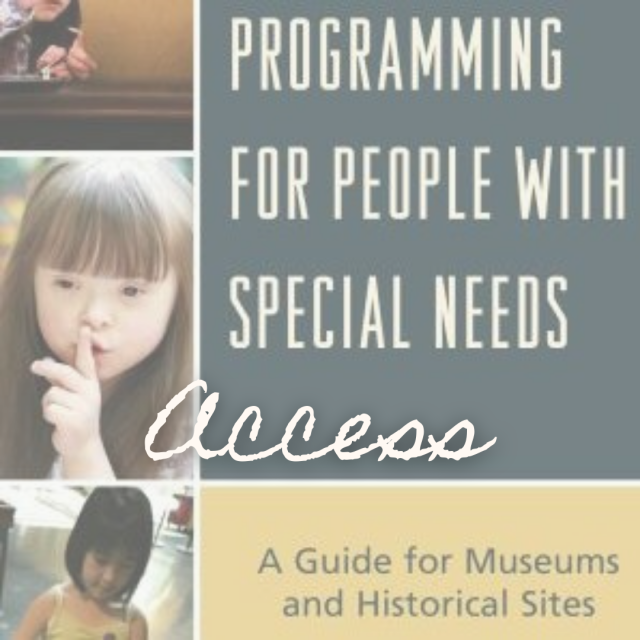
- I went to the Tennessee Association of Museums conference in Memphis in March as one of their scholarship winners… if you kept up with my twitter at all you know some of what went on there, but that only scratches the surface.  I have a blog in the works to review more of the conference, the sessions, the sights, and of course my own presentation on sensitivity and awareness of disabilities at museums.  Stay tuned for that in the coming weeks!

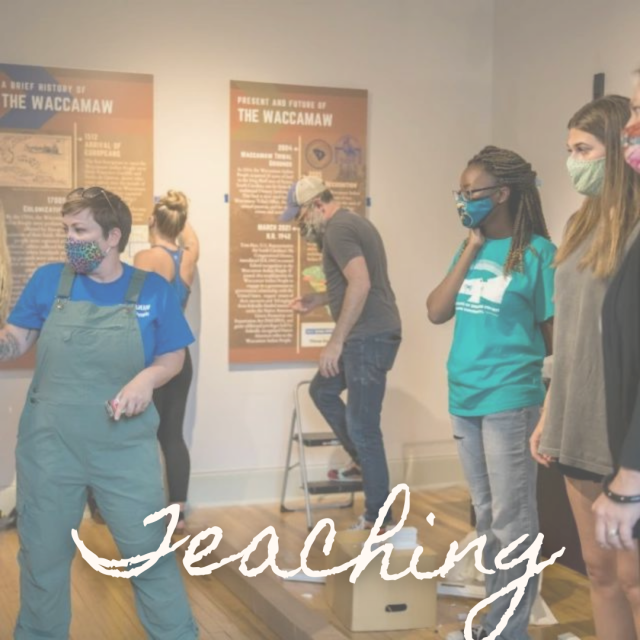
- I’ve also been finishing up teaching Explorations in Public History.  My students have been writing blogs that I post on their website, http://explorationsinpublichistory.wordpress.com/.  Check back soon, because I will be posting their final projects in the next week!  They were a wonderful class, and I look forward to seeing them as new public history professionals in the future.

- Next week I will head to New York City for a research trip!!  I will have all kinds of updates on my dissertation and ideas to talk about once I get back.  I am fortunate enough to have meetings set up with people from the Intrepid Museum, Jewish Museum, the Whitney Museum of American Art, New York Transit Museum, Museum Of Modern Art, Lower East Side Tenement Museum, Coney Island USA, and people from the Museum Access Consortium.

Liberal Arts Awards Banquet

- As for other updates… I won the Bart McCash Memorial Scholarship for Graduate Students again this year!  My dissertation committee chair shared with me last week that Dr. McCash was his step-father and an influential person in his life personally and academically.  I’m honored to have been chosen as the recipient of a scholarship named for such a great person.

- I was elected to serve as the Graduate Student Association president for the 2012-2013 academic year.   I’m looking forward to serving the 3000 graduate students at Middle Tennessee State University!

SGA Awards


- April finished up my term as a graduate senator for the Student Government Association.  Serving as a senator was a wonderful experience, and I learned a lot.  Surprisingly, I was elected “Best All Around” senator, and the graduate students were named “Best Friends” by the Senate Superlatives.  We were treated to a lovely banquet on campus on my birthday, which I consider to be MTU’s birthday gift to me.

- So I had a crazy end of my academic semester, not to mention I bought art, had a birthday, watched a lot of trash TV, finished the Game of Thrones books, spent too much time looking at Tumblrs, got a radical haircut change,  and reorganized all of my bookshelves.

This summer should be more conducive to blogging, if I can squeeze it in among writing and researching the dissertation, traveling, working as a camp counselor at Camp Will in Franklin, Tennessee, and some quality lake time.  I have plenty to write about, so keep coming back!!

Thanks, as always, for reading.

Categories: Uncategorized | Tags: , , , , , , , , , , , , , , , , , | Leave a comment

Where have I been? Well, let me tell you ALL about teaching Public History…

I can say with all honesty that teaching public history is the single most rewarding, educational, and fun experience I have had in my time as a PhD student at MTSU.  Sure, studying abroad in Toronto was incredible and I got some great field work experience and great portfolio builders, classwork and time spent with my fellow graduate students is educational and fun, and it goes without saying that conferences provide some of the best networking opportunities, learning experiences from other professionals, and titillating giveaway contests in the hospitality suite.  Teaching World Civilizations I was also a great experience, and imparting my knowledge of Ancient History to unsuspecting undergraduates was a learning experience for me as well as my students.

However, there is just something about teaching students who CARE about the subject, are passionate about public history, learning, and just the field in general that makes me look forward to teaching, planning, and going to class every week.

Here is some background information….

As a PhD Resident I was posed with the task of finding a residency that would fulfill the requirements of the department and also provide me with professional public history work that will inform my dissertation and eventually my career.  I struggled and thought, schemed and fought – but I did NOT want to teach.  I wanted to be “in the field.”  In my time as a Masters student in Memphis, I was given the opportunity to work in a museum for my assistantship while also holding two other museum jobs – I missed working in those institutions directly with the public on a daily basis.  Hello!  PUBLIC historian!  As things began to fell in to place, it seemed that teaching was going to be the best bet for me.  I wasn’t convinced, because, hey – I want to be a public historian, not a teacher.

I had no idea what I was getting myself in to.

I have talked several times about teaching World Civilizations on this blog.  I knew preparing for that class what my audience would be; generally students who take World Civilizations come from all colleges of the university and are not super enthused about history or taking a course about ancient, classical, and post-classical civilizations.  I hope that in teaching that class I did make a difference to some students and get at least a few interested in the subject.

True story.

Coming in to the Spring semester, I knew that the students in Explorations in Public History would be a completely different audience.  For one thing, the course is a 3000 level course, which means that many upper-division students are enrolled and also that many of my students are history majors.  History majors have to love history, at least to some extent, right?

So what is this class I’m teaching?

Explorations in Public History is a course that basically serves as an introduction to the field of Public History for undergraduate students.  In preparing for the class I knew that the first question most students, and people in general, would have is, what is this public history that you speak of?  In writing this, I realize that perhaps this is something that I haven’t even really addressed on this blog.  So let me explain to you, my readers, how I’m going about teaching this class.

The course meets twice a week, so each week I am presenting a different topic relate to Public History.  The topics we are covering in class include: What is public history? Who owns history?  Bias and POV, Audiences, Archaeology, Material Culture, Archives, Historic Preservation, Oral History, Cultural Resource Management, Historic Memory, Museums, Education, Public Programming, Exhibits, History in Unexpected Places, Popular Culture, Environmental Protection, National Parks, Media & Technology, jobs & Opportunities, Professional Development, Issues & Problems.

A relevant Ryan Gosling Meme

This is a TON of material.  Some of these topics are combined, many overlap, and all are related in some way to the larger themes of the course and the public history program.   Essentially, each week my students are assigned readings that relate to the week’s topic.  For instance, the first topic was “What is Public History, and Who, if anyone OWNS the Past?”  My students read the National Council on Public History Website article, What is Public History? (http://ncph.org/cms/what-is-public-history/).  They also looked at James Cuno’s introduction to the book Who Owns Antiquity.

We had in class discussions about the readings, and we also explored other questions in discussions such as: What are some of the definitions of public history?  How do YOU define public history?  What is your favorite part of public history? If you don’t have one yet, what are you most interested in learning about? What do you expect to learn in this class? Who owns the past?  What are some issues involved in believing someone can own the past? Can anyone own the past? What problems might historians, especially public historians have because of the idea that the past can belong to someone?

Additionally, I opened a forum on D2L for students to post responses to specific discussion questions so that they could interact virtually.

Not my students (most days... that I notice..)

The first day of class I was extremely pleased to find that I had a class that would actually talk to me. Intelligently!  With thought-out answers and questions! What a change from a group of general education students who aren’t necessarily interested in learning the finer details of Egyptian history or ancient Chinese civilizations. The discussions and discourse in class have really helped to make this class enjoyable for myself as a teacher, but also (I hope) for my students who don’t have to listen to my lecture from a powerpoint all day.

Most weeks, in addition to readings and in-class and online discussions, we have a guest speaker and/or a field trip.  In public history, what can you really learn about your public and the field by sitting in a classroom listening to some graduate student expound on theory and ideas?  In fields that I myself have not had a ton of personal experience in, I have been lucky enough to find willing experts at the university or in the community who are willing to take time out of their days and busy schedules to come speak to my students.  This is something I am very grateful for, and I can’t begin to express the extent of my appreciation to those individuals and institutions.

In addition, my students are required to volunteer DOING public history for an organization in the community, and also to do hands-on individual projects.  The project proposals I got had some really great and innovative ideas, and I can’t wait to see what my students produce.  These things will go into their portfolio, and also give them experience in the field, and something to put on their resumes should they decide to pursue public history.

I recently created a website for the class as a place where student projects can “live” after completion.  Some driving or tour guides, brochures, or informational tools might not otherwise get any exposure, so check out http://www.explorationsinpublichistory.wordpress.com for more information about the class, photos, and coming soon…. Student-written blogs!  That’s right.  I’ve offered extra credit to students who want to write about some aspect of public history on their class website.  Again, this is a great opportunity to work on writing for the public, develop thoughts and ideas about aspects of public history, and also create a presence on the web.

Sorry to be so long-winded in this post, but I am so thrilled with this class that I had to share it with the world.

It's true: I owned this book. BUT NOT ANYMORE!

Essentially, I have ended up absolutely loving something that I never thought I wanted to do.  This reminds me of another time in my life when I had preconceived or ill-thought out notions about my professional career.  When I took the job as an Educator at the Pink Palace Museum in Memphis, my boss at the Sam Davis Home (after the first time I worked there…) laughed and could not believe that I, who was not the biggest fan of children at the time, was going to work in that exact field at a different museum.  Who knew that those experiences would lead me to where I am now? – Writing a dissertation about education in museums.

And honestly, aren’t I doing something in the field of public history, through teaching?  Oh Past-Katie… how little you knew then.

This is me now - just add public. BTW - You can buy me this shirt by clicking the picture. I wear a small.

This is, of course, a lesson for all aspects of life, but particularly in academic or professional work – why not try something new?  You never know where you might end up.

Are any of you readers teachers?  What kinds of things get you excited about teaching?  How do you share your enthusiasm with your students?

Categories: Uncategorized | Tags: , , , , , , , , , , , , | Leave a comment

Cultural Geography: Toronto, Ontario

Woo Canada!

In the summer of 2011, I was lucky enough to get a MTSU Study Abroad Scholarship to study all the way in… Canada! Through a bit of coordination I was able to create an Advanced Projects in Public History course to get PhD level credits for the trip by doing additional work with the professor who led the trip to the Great White North.

For the main part of the trip I and the other students journeyed all around Toronto. It was a blasty-blast, and we learned so much! Toronto is extremely culturally diverse, so this was the perfect way to learn more about Cultural Geography, heritage tourism, history, and of course history. The undergraduates were required to explore several ethnic neighborhoods and complete a scavenger hunt for various things such as national colors, ethnic food, signs in another language, and other things. I joined in on this and was able to learn a lot from the neighborhoods, have some great Greek (lamb), Italian (gelato), Asian (fried rice) and other foods and drinks (bubble tea – blech), while at the same time working on my own advanced project.

Click for better image of Walking Tour

Street Car

My extra assignment was to create a walking tour of downtown Toronto. This is a huge assignment, but we walked approximately ten hours a day for two days so I had plenty of content to contribute. The best way to experience a place (and stay healthy at the same time) is by walking and observing the various areas you encounter that you wouldn’t see from a car, cab, train, or subway. We did have to take the subway a few times to make the most of our time. The student group that I was with did not specifically plan a route for our exploration but instead wandered to various districts. This was a great way to see the city and the different historic and cultural districts. However, perhaps time could be better used with a loose plan of action. Therefore I created a walking tour brochure for future students.

Here it is!

This guide serves as a guide to several culturally and historically interesting places but also encourages students to make their own route. I chose places for this walking tour that would appeal to a variety of students. The sites visited include government buildings, universities, ethnic and cultural neighborhoods, a museum, a historic house, and city parks. The brochure also includes official links for the sites that are included so that when the guide is distributed online students and others can learn more about the places they will visit on the tour. The distance and time that it would take to visit these sites may seem excessive, but the group of six that I was a part of managed this and more in our time in Toronto. Public transportation is also an option for students who may not want to experience the entire city via foot.

Click for PDF

My favorite places that I visited were the University of Toronto, Kensington Market, The riverfront and boat tour, and most of all, the Riverdale Farm.

...and they had the cutest baby goat I've ever seen...

Riverdale is a part of the Toronto Parks and Rec department, and is a fully functional farm open to the public.  They had all kinds of farm animals, trails, outbuildings, produce, and flowers.  We were lucky enough to be there on a warm day, and I thoroughly enjoyed being able to walk through Cabbagetown into a farm in the middle of a huge metropolitan area.  Visitors can buy produce from the farm, and there is also a cafe on site.  While we were there, we accidentally walked into a barn classroom where young students were attending a camp.  Admission to the farm is free, and the site has a farmers market, public programs, and various events.

We estimated that over 2 days we walked approximately 30 miles. In that time we saw trees growing in cars, innumerable Tim Horton’s-es, and countless pleasant, helpful, and kind Canadians.  In the future I will most likely post more about our trip to Canada and the things we encountered.

Toronto is an amazing place to visit for cultural, historical, environmental, and healthy activities. I didn’t get to see even half of what I wanted to see, and I look forward to going back again soon to walk another 30 miles in two days.

Click here to watch the video of students talking about eating PB&J in Niagara, Poolside

During our northern excursion, we also visited Niagara Falls where we ate PB&J poolside, saw the Falls at night in lights, and saw the rest of the Gatlinburg of the north, the Niagara countryside where we took our group band photo, and we had a myriad of adventures in the van including writing a song about our fearless leader, Doug.

All in all, it was a great time, and I would recommend the trip to anyone interested in cultures, geography, history, or any combination of the above.

Doug and the Dougie-Doug-Dougs

Categories: canada, history, ontario, toronto, tour, tourism, travel, Uncategorized | Tags: , , , , , , , , , , , , , , , , | 3 Comments

Facebook in the classroom: How can we effectively use social media to teach?

I’ve talked about facebook in the classroom before, as a way to provide funny snipets of history from historical figures.  I wanted to try to find a way to integrate the social media that students (and myself!) use on an almost every day basis into the classroom as a teaching/learning tool.

As an optional extra credit homework assignment (full assignment and rubric available here) I challenged students to think creatively as an historical figure.  Their assignment was:

1. Chose a historical figure that we have studied or a person from one of the civilizations we have covered in this class.

not an accurate representation of me

2. Create a profile page for this character.

3. The next page has a checklist of all the information that must be included.  Use this sheet to complete your research before you begin constructing the page and finding pictures. Make sure you check off each item as you do it to get full credit!

4. This page does not literally have to be an online account.  You can produce a mock-up through Word, Photoshop, Powerpoint, or with magic markers or colored pencils depending on your level of creativity.

5. This assignment does require research.  You may use your textbook or other academic books.  You may go online to find information, but please remember that WIKIPEDIA IS NOT A VALID SOURCE.  NEITHER ARE NON-ACADEMIC WEBPAGES.  If you are unclear on what an “academic webpage” is email me.  Use websites with .edu or.gov for valid information.

6. You must, as always, properly cite your sources and include a works cited page.  I prefer footnotes for this assignment since it needs to be aesthetically pleasing.  Since this assignment requires more research I expect your citations to be correct.  If you have questions, email me or visit the writing center.

7. To get full credit you must have information for every category listed below.  This may require you to be creative but also be historically accurate.

8. Extra extra credit (1 point each):

  • Prepare a presentation for the class on your historical figure, your page, and your process of creating this page for an extra point.
  • Create an actual facebook page published using the information you have compiled here.
Students then had to fill in the worksheet with the following information:

Since this was an optional homework assignment for extra credit it did involve a lot more work and research than previous projects.  I wasn’t sure how students would react, or how many would take the time  and effort to fully develop the assignment.

Unfortunately, I didn’t have as many students participate in this as I would have liked!  In the future I hope to make this a required homework assignment instead of extra credit.

One creative idea was to do a page for Cleopatra using the Shakespearean play for the wall facts and conversations among the Pharaoh and her lovers.

I also had another Cleopatra, Achilles, and Jesus. Surprisingly, they all love watching Ancient Aliens!  Clever, students. Very clever.

Achilles’ page was great.  He has some pretty awesome lines; his last status update was, “taking a dip in the Styx River!”  This was after he met with Homer to give him some info on the Illiad and complained that Lycomedes made him dress like a girl.  His interests include working out, sailing, and traveling, while his favorite movies are 300 and Antigone.  Also, for all you Achilles stalkers, he lives at 1345 Hellenistic Drive, Athens, Greece.

My second Cleopatra got very creative, as well.  Her last status was, “…will not let Rome control me!  My Antony is dead and I can not live without him!” dated 30 B.C.E.   Her relationship is “It’s complicated” with Julius Caesar.  Her statuses also complain about having to marry her brother Ptolemy XIII, but she is quite happy to take the throne and rule Egypt.

She also talks about running off to learn Egyptian language and culture to try to gain respect of Egyptians.  Her favorite music includes the sistrum and Walk Like an Egyptian, and she enjoys watching the Style network.  And for any Cleopatra stalkers, you can email her at isislover@ptolemy.com   Her political view is divine rule, and she included several pictures of herself on her facebook page.  She included photos from Egyptian papyrus, Renaissance paintings, 1920s film, Elizabeth Taylor as Cleopatra, Kim Kardashian as Cleopatra, Angelina Jolie as Cleopatra, and also a Greek bust and a coin that may show the “real” Cleopatra.   Another album was also posted of herself and her Ptolemy family members.

My students used (for the most part) valid educational websites or books for this research project.  It seems that they enjoyed themselves and the opportunity to be creative in a history class, which may not always be the case.

It also seems that the students learned quite a bit from this project.  Not only did students learn a lot about a specific person from history (or mythology), but they also learned a lot about creative thinking, the historical context and the world of that person, and how to do proper research and citations.

Have any of you used Facebook in the classroom, or other social media?  How can it be used effectively?  I encourage you to try this with your students either as an extra credit assignment or as an alternative homework assignment.  I believe in my future classes it will be a very beneficial learning tool.

Categories: ancient culture, ancient egypt, ancient history, blogs, education, egypt, historical fiction, history, media, pop culture, popular culture, popular history, public history, social sciences, teaching, teaching tools, Uncategorized | Tags: , , , , , , , , , , , , , , , , , , , , , , | 1 Comment

What can you learn from watching History’s “Ancient Aliens”?

I often wondered about this very question while watching this show (before I gave up watching because it almost gave me a stroke to watch it).  I decided to assign my students in World Civilizations 1 a homework assignment revolving around this very question.

The assignment was basically this:

Watch an episode of Ancient Aliens either on the History Channel or online. ***Be sure to watch an episode that is about ANCIENT aliens (despite their name, they have had shows on about the American Founding Fathers and the Third Reich). I would prefer you watch something from Season 1

1. Choose three claims or ideas that are presented in the show.

2. Using critical thinking and deductive reasoning, and some research if needed, come up with an explanation for these claims using historical sources and what you have learned in class or from the book about ancient civilizations.  CITE YOUR SOURCES!

3. What things did we talk about in class that are also discussed in this show?

4. Do you think this show fairly represents history?

5. Why do you think the history channel would show this?

6. Is this a show about history?

7. Who are the “experts” that present the evidence, and what are their backgrounds?

8. What are alternate explanations to theories presented in this show?

9. What is your opinion of this show? (Honesty is fine, as always!)

I hoped that this would help spark some ideas about questioning sources, thinking both critically and historically, and questioning bias and motives that are always present in historians and all people.

I was pleased to get plenty of well thought out and reasoned papers!

Students brought up ideas such as:

-          Maybe the “radioactive bones” at Mohenjo-Daro were exposed to the sun for a prolonged period of time.

-          Even if there are aliens, why do we give them credit for everything?

-          We can’t assume aliens exist from something like a cave drawing that is similar to another one on the other side of the world.

-          Aliens didn’t build massive structures for us – today we are too lazy to imagine something like that being possible.  Instead the ingenuity of ancient man isn’t given enough credit.

-          The show is just an opinionated crazy idea that the History Channel shows to make money and get more viewers.

-          Just because a god or spirit is shown in a different way than we think they may have looked doesn’t mean it was an alien – that’s just how followers depicted them

-          More time is spent on the ancient astronaut theorists’ ideas than those with historical research backgrounds – this shows an obvious bias.

-          People looking for alien evidence are not objective and are just trying to find the most simple explanation without using their brains.

-          Why is it so hard for us to give ancient ancestors credit for what they accomplished? This insults those ancient people and also people today.

Today we had a follow-up discussion about the assignment, and we talked about what they got out of the assignment and I also shared with them what I hoped they learned.

We talked about art and artistic representations of people.  Several students wrote about the artistic and physical representations of Akhenaten and Tutankamun.  Ancient Aliens claims that the reasoning behind this is that they were aliens.  Obviously.  We argued

Alien or artistic representation?

instead that oftentimes art is just that – a person’s own visualization of what they think.  A great modern example is Francis Bacon’s representation shown here.  Might someone in the future think that there was a person who looked like that?  Will they immediately come to the conclusion of “alien?”

Additionally, we discussed the idealization in art that is sometimes used.  Almost everyone recognizes the golden mummy mask of Tutankamun, but did he really look like?  He certainly wasn’t gold, and his features are more of a uniform look used to show Egyptian Pharaohs throughout much of the New Kingdom.   In reality, his mummy shows that he had protruding teeth, a slight cleft palate, and a slightly elongated skull.

Perhaps most importantly we discussed the idea of questioning sources and biases.  Throughout Ancient Aliens many “experts” are interviewed.  The name card graphic tells their name and part of their credentials, such as author or Ph.D.  Some of my students went the extra mile to actually look up these people, their curriculum vitaes, and their personal websites (without using Wikipedia!!!).  Most pleasing to me was the student who looked up Giorgio Tsoukalos (http://legendarytimes.com/giorgio ).  This website claims that he is the world’s leading Ancient Astronaut theory expert.  Exactly what does this mean?  Wouldn’t you think that someone who makes a living talking about ANCIENT history would have at least a minimal background in history to have the proper context to discuss this?  One would think.  Tsoukalos DOES have a college degree – in Sports Management. His website also explains, “Until 2005, Tsoukalos also functioned as a professional bodybuilding promoter; for 6 consecutive years he promoted, produced and directed the IFBB San Francisco Pro Grand Prix, an annual cornerstone event in professional bodybuilding.”  Additionally, “Giorgio enjoys a good and relaxed sit-down meal with friends, weight lifting, listening to motion picture scores, classic jazz standards, classical opera, sailing, going to the beach and the movies, and hanging out at the Legendary Times Clubhouse in Southern California” and “ 2 more things: (1) Giorgio loves listening to talk radio. Both at home, the office and in his car. Please don’t ask him to turn it off. Ever. (2) Giorgio loves to sit front and center at the movie theater (5th or 6th row). Movies are meant to be seen like this, that’s why they are shown on the silver screen first. If you want to sit in the back of the movie theater, go right ahead, but you’ll both watch the movie alone cuz’ he won’t join you in the back, and you might as well just wait until the movie comes out on DVD so you can watch it on TV.”  No further comment needed.

Additionally, a student astutely pointed out that this show DOES have some historians that appear – to give historical context and explain various stories and historical happenings.  The way this show is edited almost makes it seem that those actual historians agree with the “ancient astronaut theorists.”  Whether or not they DO agree is never addressed, but tricky editing gives that appearance.

Everyone should understand: you don’t have to have a PhD to be an expert.  Conversely, having a PhD doesn’t necessarily make you an expert.   Is a person with a PhD in 19th century American Literature necessarily an expert on chemical reactions?

OBVIOUSLY aliens are the explanation.

Another great product of this assignment was that I got my students to think critically.  Rather than just saying, “I don’t know – therefore, aliens” they started to think back to lecture and things they have read in their books to come up with other explanations than just aliens.  They also did some outside research to find out what historians think about such “mysterious” things as the building pyramids or moving huge stones for monuments.

I was pleased that many of my students were highly offended by the show’s idea that ancestors were too stupid or incapable of doing great things.  My lectures and enthusiasm for ancient and classical peoples and their abilities seems to have rubbed off on them.  Rather than giving credit to outside extraterrestrials, my students gave explanations that included our ancestor’s ingenuity and ability.

An expert on Ancient Aliens

Lastly, we discussed the dangers of talking in absolutes.  Many times the “experts” say words like “obviously” or “of course” without hard evidence.  Even historians may not have the absolute facts or evidence, but many times they say “possibly” or “maybe” – not fact – in those situations.  We may not know either way, but using absolutes can lead to the wrong impression.

Several people have alerted me to the South Park episode about the History Channel.  It is available to watch online at: http://www.tv-links.eu/tv-shows/South-Park_8958/season_15/episode_13/.  The synopsis is: “After watching a Thanksgiving special on The History Channel, the boys believe that aliens were involved in the original feast. But, questions remain… was the first Thanksgiving haunted? Is alien technology responsible for stuffing? The truth could change Thanksgiving for everyone.”  I personally can’t wait to watch it, and I’m glad the show’s creators are tackling this issue as well, on a level that many people may understand.  Have you seen this episode?  If so, what did you think?

Whether or not you believe in aliens is beside the point.  Why can’t we give ancient people credit for the things they did?

Now you, the reader.  I would love for you to try this assignment yourself!  I want to get more feedback from people about this show, sources, “experts”, etc.  Have you done a similar assignment in your classroom?  What do YOU think about the show?

Categories: ancient culture, ancient egypt, ancient history, archaeology, blogs, education, historical fiction, history, media, pop culture, popular culture, public history, social sciences, teaching, teaching tools | Tags: , , , , , , , , , , , , , , , , , , , , , , , , , , | 5 Comments

Popular Culture and Public History

Getting ready to present my panelists

I recently ventured to New Orleans to present at the Popular and American Culture Associations in the South annual conference. Rebecca,  another PhD Student at MTSU, and Dr. McCormack, one of my professors who has been super influential in my studies and ideas, joined me on the panel, “Public History and Popular Culture: Use and Abuse.”  Needless to say, we had a fabulous time enjoying the sites (and food!) of NOLA, and I felt pretty good about our panel and presentations.  However, our panel, being on Saturday morning in New Orleans, was not as well-attended as I would have liked.  Therefore, I have decided to present my information to you, my online viewers.

We’ve seen social media impacting movements throughout the world and it has even helped to organize the overthrow of politically figures throughout the world.  Social media is a part of pop culture through its power to unite people and share information across the world as well as with friends.  But can these devices and the internet also teach us anything?  And how can these be adapted to use in classrooms?

My first example is from YouTube – The Historyteachers channel – Amy Burvall is a high school history teacher in Hawaii who believes very much in engaging her students in nontraditional ways.  She uses her own free time to take popular songs, such as Lady Gaga’s Bad Romance and Justin Timberlake’s SexyBack, and write new lyrics pertaining to subjects she is teaching in her classroom. She then dresses in costumes and sings the song for a camera and edits the videos using graphics and effects to make them visually appealing.  If you watch the Norman Invasion video, you will never again forget the date of the Norman Invasion. She uses these videos not as the only teaching tool in her classroom, but instead as a jumping off point for her discussions.  Students and teachers alike comment on these videos, and almost everyone seems to enjoy them.  She has 53 uploads to her YouTube channel with everything from the Beatles, to Lilly Allen, to Nancy Sinatra and Blondie.

Drunk History – is an interesting experiment in getting historians drunk and then filming them as they explain an historical event or talk about a historic person.  Whether or not these are completely staged or not is debatable, but their affect remains the same.  The original videos, produced by Derek Waters, have appeared on the Funny or Die website and they permeate Youtube and are shared fiercely on facebook and other social media sites.  The drunk historians narrates an historical event, in this case, the relationship between Frederick Douglas and Abraham Lincoln and its impact on the country and race relations.  Famous actors, in this episode Don Cheadle and Will Ferrell, with a cameo by Zooey Deschanel as Mary Todd Lincoln act out the narrator’s words and mime the words as if they are their own.  The effect these historical figures played by celebrities using popular vernacular of our time is amusing, but at the same time, the stories are generally accepted as true tellings of historical events.  Someone may actually learn something about race relations or the roles that these two historical figures played in the beginnings of civil rights and the abolishment of slavery in the United States.  Other examples include Jack Black as Benjamin Franklin, John C. Reilly as Nicola Tesla (my favorite!!!), and Michael Cera as Alexander Hamilton. 

Tumblr- My Daguerreotype boyfriend – this is something I came across in my time as an educational coordinator at a Civil War historic site.  The pictures are of actual people from history, who some people think are attractive.  This site not only shows the pictures but tells the medium with which the photograph was taken, the year, and sometimes a story about that person.  This may teach people something about these people, such as what people wore in that time period, the history of photography, and a plethora of other things.  However, I believe one of the most important things that this website does is personalize history.  Many people see history as a cold and or dead thing in the past with no bearing on the world today.  Looking at these photographs and pictures can help people to realize that these were people with lives and stories of their own.  And let’s face it… those are some hotties of history.

Blogs –  The National Archives have several blogs that they maintain, but one of the most interesting to me is Prologue.  This site really engages the public instead of just telling stories or listing off historical facts.

On Fridays they have facial hair Fridays – for whatever reason, facial hair, mustaches and beards are growing extremely popular with people today.  Mustache finger tattoos and fake moustache packets are popping up all over the place.  The national archives have pounced on this and now every friday they post a picture from their collections of a historical figure with interesting facial hair.  Not only do they post the picture, but they also tell about that person and his impact on American history.  The gentleman in the lower corners story is as follows, “If you’re planning to travel this Columbus Day holiday (and it was, like, 1835), you might thank this guy for building the first steam locomotive in the US: Peter Cooper—inventor, industrialist, and one-time Presidential candidate. But, most important for our purposes, Cooper was the owner of a truly remarkable beard. Impressive facial hair is an asset to any Presidential candidate, but we are sorry to report that Peter Cooper’s beard did not win him the 1876 election, when he ran for the Greenback Party. Still, at the age of 85, Cooper is the oldest person to be nominated for the Presidential office.”

Not only do we learn about the beard and the person behind it, but we also learn a few interesting historic facts as well.

On Thursdays the blog hosts a “Put a caption with this photo” contest.  They post a photo from their collection that is funny or interesting and then ask readers to come up with a clever or amusing caption.  The winner gets something from their online giftshop, and the following week the pictures’ true story is revealed.  Again this engages people, teaches them something, and they get a prize while the national archives boosts sale in their giftshop.

These two slides are pretty self-explanatory – several historical figures are popping up on facebook and on twitter.  While these are often times amusing or clever, they also do provide snipets of history and biographical information.  As discussed below, I hope to experiment with this more in my class through an extra credit opportunity.

As pop culture for the general populous

With historians these things are generally immensely popular, especially among graduate students.  Youtube videos related to historical events make the rounds among my teacher and student friends on facebook and twitter to enormous response and critique.  Historical facebook twitters and facebooks are generally maintained by those people who study the figures.

However, should I post something on my own facebook or twittwe, historical or related to popculture and history, friends who are not historians or particularly interested also often comment.  Their comments are not as varied or voluminous, but they do exist on some level.  An interesting study of the effect on the general populous would be valuable to see how these things affect people who are not in the history or education fields.

Many comments on youtube videos and articles about twitter and facebook are by people who are interested in the subject matter, are teachers, or are students doing research for a class.  However, many times the students comment on how much they enjoyed learning something new in a way that is not usually used in the general classroom.

Pop culture in the classroom – my assignments and thoughts

I currently teach a section of World Civilizations to 1500 at Middle TN State University where I have a variety of students and only 3 history majors.  While I want my students to learn to appreciate history and what it can teach us, I’m not huge into learning facts and dates, but I believe there are some that are very important.  I hope instead that my students can learn critical thinking and the questioning of sources and ideas.  When my class studied pre-Hellenistic Greek cultures I opened the class asking them if they remembered from their readings on which island the Minoans lived.  No one could answer me until they looked it back up in the book.  I then delivered a short presentation on the Minoans, the geography of Crete, the culture and stories of these people, their art, and the archaeological excavations the site has undergone.  Once I delivered the information I asked how many of them knew the band Radiohead and enjoyed their music.  A large majority of the class was familiar.  I then explained we would watch a youtube video, which received exclamations and praise.  I showed my class “I’m from Crete” by Amy Burvall on the historyteachers channel.  The song is a play on Creep by Radiohead, and the chorus repeatedly sings to the viewer, “I’m from Crete… I’m Minoan…” Interspersed throughout the song are other facts about the culture such as their discovery by Sir Arthur Evans, bull-leaping games, and dolphin fresco art.

At the end of the video I engaged my students in a discussion about this video.  The first reaction from one student was that he thought it was terrible and he couldn’t learn anything from it.  I was not going to let him get away with that explanation so I pushed him to tell me why he thought it was awful; perhaps the singing isn’t the best in the world and the graphics are done by a high school history teacher, not Michael Bay.  I then asked him, well, where are the Minoans from, and he said from Crete.  He then went on to list at least 5 or 6 other small facts about the culture that he had remembered from the video and reneged on his original statement that the video was terrible and worthless.  On my students first test I included the fill-in-the-blank question, “I’m from _____________, I’m Minoan.”  Every student who was in that class remembered Crete and got it correct.  While these facts may not be the most important thing they will learn in my class, I’m still proud that I have been able to use popular culture in the classroom successfully.

We also covered questions such as, what does this teach you? Can you learn better from something like this? What do you like and dislike about it?  These questions get the students thinking historically and questioning, but still they have fun and enjoy the learning environment more than they would reading a textbook or listening to a lecture.


So that was my presentation in a nutshell – unfortunately for you, the internet viewer, you were unable to catch my witty remarks and anecdotes, but I hope this was somewhat beneficial or representative of the content.

In other news, I’m about to assign an extra credit project to my class in which they research information needed to create a facebook profile page for a historic figure we have studied.   Hopefully soon I will have information to report on that!

St. Louis Cathedral and the French Quarter

I will leave you with this picture, of me enjoying the other side of the conference – sight-seeing in NOLA!Crawfish deliciousness


Categories: ancient culture, ancient history, annual meeting, blogs, conference, education, history, media, museum, museum studies, pop culture, popular culture, popular history, public history, Uncategorized | Tags: , , , , , , , , , , , , , , , , | 4 Comments

Great book for anyone who educates anyone about any kind of history

In my professional residency colloquium this semester, myself and my 3 fellow PhD students are required to read books and articles related to the Public History field.  The first book we read was by far the best book I’ve read in my entire time as a graduate student of history/public history. My only regret is that I did not read the book before working in education in museums!  I would highly recommend this book to all museum professionals, secondary history educators, museum educators, public historians, and all graduate students or people interested in pursuing public history or education.

The book is Historical Thinking and Other Unnatural Acts: Charting the Future of Teaching the Past, by Sam Wineburg. Philadelphia: Temple University Press, 2001.  You may even buy the book yourself on Amazon  or Half.com and I highly recommend that you do!

Here are some of my thoughts and notes on the book as I was reading it, and as it relates to my own class and degree plans.  These are basically just notes on chapter 1 on the text, and I hope to share more thoughts on this book in the coming days!

Sam Wineburg teaches Education at Stanford University and previously taught at the University of Washington in Seattle as an adjunct History instructor as well as instructor of cognitive studies of education.  According to his Stanford faculty page, Winebug received a Bachelor of Arts in History of Religion and a PhD in Psychological Studies in Education.  This background is evident throughout the book, and sometimes the educational psychology was confusing to someone with little “traditional” educational training.

The author approaches several questions I have wondered about both in my studies and in the beginning of my residency such as why people study history at all, what history can teach us not just about the past but about humanity and ourselves, how history should be taught, and what exactly history’s place is outside of the classroom. Wineburg’s analysis of how people learn, and how history has been taught in the past is enthralling.  Additionally, the questions he asks, such as why to study history and what students should learn from their history classes, are intriguing and thought-provoking, especially to me as I teach my first class in a “traditional” classroom.

Section I is labeled, “Why Study History?”  The first chapter in this section shares the title of the book, “Historical Thinking and Other Unnatural Acts.”  Wineburg opens with the debate on national history curriculum standards and the question of “which history” students should be taught in the classroom.  Traditionally, white old men were the focus of history courses, and with civil rights movements and women’s rights movements this has been called into question.  To me this seems almost a moot point; is there a specific history to learn?  Wineburg goes on to explain that history is grouped into the subject heading humanities, and this is true at Middle Tennessee State University as well as most other colleges and high schools.  Rather than a string of events and people and dates, students should be learning judgment  and critical thinking from humanities courses, history included.  Additionally Wineburg claims that history can humanize us in ways that other parts of the curriculum cannot.  The author even goes so far as to state that history can bring us together and not tear us apart as recent debates have done.

In planning for my own World Civilizations I course, I wanted to introduce my students to the global culture through the class and stories that can be found throughout ancient and classical history. I want to focus on the connections of cultures through themes to humanize the people and civilizations we talk about.  Additionally, critical thinking and questioning are ground stones for my course structure.  Explaining to my students that the people in the past are foreign to us and some of the things they did were strange is not difficult; students often bring that up in class and claim that they find something about ancient cultures “weird.”  I try often to relate the actions and values of people from the past to my students here in 2011, which has presented some challenges.
Familiarity and strangeness are also explored in this first essay.  While the familiar history helps us to place ourselves in time and

Wineburg claims that “strange” history that excludes people and does not engage others.  I have keenly felt this with World Civilizationswhich many people find to be foreign.  However many people have an inexplicable love for Ancient Egypt as evidenced in popular culture, museum exhibitions, Halloween costumes, and countless other venues.  Perhaps in the case of Egypt the strangeness is what is appealing.  In my class I try to appeal to the interesting “strangeness” of each culture or group that we study in an effort to engage my students in conversation and thinking about these people, or even to get them to remember any little detail about these people from the past.  What will people in the future think about them?  Will they be considered strange by people looking back to the past in which we live?relate to the past the strangeness of the past does not always engage students or others.  Discarding history that we do not understand or that does not fit with our previously taught histories or ideals is very dangerous.  People such as Hitler or Stalin, or even modern day political parties come to mind; these people and groups have used history to fit their own worldviews, and contorted what they knew, or thought they knew, to fit what they wanted in their own agendas.

Related to this strangeness is also the development of feelings of kinship and relationship to people in the past that we study.  A movement towards learning about humanity and social history is evident in the past several years, and perhaps because of this familiarity and my own personal training, social history is what I enjoy the most.

Even museums are moving towards this model; a session at the Tennessee Association for Museums last March focused completely on telling the stories of people who lived and their personal documents and pictures; using these primary sources, curators told the history of Tennessee through people rather than “facts and dates.”  This builds a connection to the past that might otherwise be lost in Woodrow Wilsons, “one damn fact after another.”  Even so teachers must be careful when instructing students in using primary sources.  Wineburg’s example of an honors student who interpreted primary documents was particularly telling; the student reads the sources well and understands the content, but he distorts it with his worldview and bias to shape it to what he already knows.

I want my students to understand that everyone has a bias and a worldview that is present through even what claims to be the most objective writing.  We have also explored primary sources such as the Epic of Gilgamesh, Hammurabi’s Code, and the Chinese Peasant’s Protest, and primary images and artwork.  Through group exercises I have tried to explain that even though these are primary sources, the authors and artists also had an agenda to some extent that must be identified.  Especially with the Peasant’s Protest I believe that this information has begun to sink in with the students.  Again, this comes down to critical thinking and analysis, which is one of the most important skills I want my students to learn in my class.
Finally, there are three other concepts from this chapter that I particularly enjoyed.  Wineburg’s explanation of context and strangeness through Marco Polo’s excerpt on unicorns/rhinoceros

is a great example of people interpreting what they see and learn through their own knowledge and ideas.  It is an important thing to remember both in my own personal studies and in teaching undergraduates.  Presentism, viewing the past through the lens of today, is another important concept for me.  Trying to get students to remove themselves from the present and look back is a hard thing to do.  When we covered the Mayans and bloodletting rituals this was particularly evident.  My students were appalled and could not understand why people let mutilation and “torture” happen.  It was hard to explain to them that their worldview and religions were different, and that perhaps the people who were being sacrificed or who were mutilating themselves to give blood to their gods did so willingly.  At the same time, I tried to explain that they were people and not that different from us even though they seem so strange.  I used the analogy of wrestling or cage fighting today and even the ancient Romans and gladiators to explain the allure of seeing executions.  At the same time, there was a difference in Mayan culture because of the religious

meanings behind sacrifice and bloodletting rituals.  Lastly, this chapter introduces context; this word is from the Latin “to weave together.”  History and context are inextricable, and historians and teachers must connect the past into a pattern to understand what happened, why it is important, and what we can learn from it.

This book helped spark a lot of thoughts on my own study of history and how I teach the students in my World Civilizations class.  I have often wondered why exactly it is that I study history and what I want my students to learn through my class.  I do not necessarily want them to learn dates or a chain of chronological events, but rather I want them to understand the bigger concepts, critical thinking, globalization and worldview changes, how to study for a test, how to think critically, how to be a citizen in a global world, and to some degree empathy and understanding of difference in culture throughout the world.  I wish I had more time to plan and to give them more resources that are “fun.”  Next time I teach this course I want to give them more hands-on and interactive opportunities instead of just lecture with powerpoint slides of pictures.

I hope this has been a helpful review!  This truly is one of the most enjoyable books I’ve read, as evidenced by the multitude of markings in the margins.  If you have read it or have thoughts, please let me know in the comments section below!!


Categories: ancient culture, ancient egypt, ancient history, blogs, book review, conference, education, egypt, history, museum, museum studies, museums, popular history, public history, social sciences, teaching, teaching tools | Tags: , , , , , , , , , , , , , , , , | Leave a comment

Another semester soon begins, after an extremely productive summer…

Getty Villa Courtyard

Indeed, I realize it as been months since I last posted, but I’ve had an incredibly productive and educational summer.  Here are the highlights that I hope to expound upon more in the future:

- I had 3 summer courses, which finished up my coursework portion for my PhD program!!  I took 2 Advanced projects and an interdisciplinary education course.

- I traveled.  A LOT. Highlights include:

- Los Angeles, CA – I went to the Getty Villa in Malibu – I have a review all written up in my head, and hopefully my more structured fall schedule will allow me to write more about it.

I met a Sphinx at the Luxor

- Las Vegas, Nevada – It was Vegas!  I also took time to look at several ancient/world history related things (Luxor, Caesar’s Palace, Forum Shops) in relation to Margaret Malamud’s article about the use of history in unusual settings.  Again, I have all kinds of thoughts and pictures from this and hope to share those this fall as well.

- Toronto & Niagara Falls, Ontario – Part of an advanced projects in public history and cultural geography.  I developed a walking tour of Toronto, and I assure you I put the leg-work in to that project.  I will post it here soon, and I hope that anyone reading this enjoys walking approximately 25-30 miles over two days as much as I did.

We started a band while we were there

- I worked as interim education coordinator for the best historic site with the absolute best staff and most incredible boss and coworkers for most of the summer.  I learned lots and got some great projects out of it.  I also got to meet a baby goat, Snickers.

- Perhaps most exciting (yes, even more so than LA and Vegas AND the baby goat) was passing both my written and oral PhD Qualifyinf exams this week!  I am officially a resident now.

Snicks!

- Which leads me to the next exciting thing… I’ve been preparing to teach my first very own class this fall – World Civ 1.  I’ve put a lot in to it, and I think it’s going to be fun!  Next semester I will teach Explorations in Public History for my 2nd residency semester, and I already have a million ideas to mull through for that class.

Hope this post explains my absence to some extent!  I plan to post more regularly throughout the school year as I have done in the past.  I have a ton of material to talk about from the summer, and I am positive that the residency year will provide plenty of fodder for the blogging machine as well.   Also look for plenty of portfolio and CV updates full of my summer work!

Teaching begins tomorrow…. send us all the best of wishes (and a prayer for finding a parking space)!

Categories: ancient culture, ancient egypt, ancient history, blogs, education, egypt, exhibits, history, media, museum, museum studies, museums, popular history, professional portfolio, public history, teaching, Uncategorized | Tags: , , , , , , , , , , , , | Leave a comment

Public History Newsletter, Spring 2011

Be sure to check out the Public History Newsletter for Spring 2011!!  Click the link for a PDF file.  We have had a lot of great things going on, tons of awards and presentations, and lots of information about the partnerships that MTSU and the Public History program have throughout the community.  I served as editor for this newsletter, so I hope you all enjoy it!

Categories: Uncategorized | 1 Comment

End of semester updates

Well the semester isn’t QUITE over, but it’s so close I can feel it!  This will mark the last spring semester of course-work EVER (which yes, I realize I have said that a couple times now…), but for real, I will be finished with PhD classes other than residency and dissertation hours in a little over a week!!!  I have had tons of news and breakthroughs in the past few weeks, so this post will try to encapsulate those and catch you up on what I’ve had going on.

Professor?

- I have a residency!!  After several really great meetings with organizations across the state, everything finally came down to funding (as always).  Luckily, the Public History program offered me the opportunity to do a Teaching Residency for the History Department at MTSU.  I wasn’t too excited about it at first, since I had a preconceived notion that teaching would mean I would have a class of US History 1 in the Fall semester and US History in the Spring semester.  That’s not the case at all!  Instead, this fall I will have a section of World Civ I, which will be great experience actually teaching college, because in the Spring I will be teaching Explorations in Public History, which is an upper-division undergraduate introduction to Public History!!  I have never taught my own courses, so this will be great experience, even if it wasn’t exactly what I had in mind… As I was told several times the  next week at NCPH, I’m super lucky to have this opportunity, and I have absolutely nothing to complain about.  I’m really excited to teach, and any advice is welcome!!

At the NCPH Opening Reception by the bay

- I went to the National Council on Public History Conference in Pensacola, Florida at the beginning of April, and it was INCREDIBLE for a million reasons.  I met a bunch of great professionals and other graduate students in my field and reconnected with other contacts, I went to some great sessions, I got to spend a long weekend away from Murfreesboro and even got a little bit of beach time in!  There are countless stories, but I’ll stick with just a couple.  First, I signed up to be paired with a mentor through NCPH, which I recommend to any students or young professionals who go to the meeting.  My mentor and I met for lunch on Thursday of the conference, and he just had great advice and encouragement, and it was really just nice to have lunch with someone new who had perspective on my school stuff and my future and just life in general.  Second, I went to a session on teaching intro to public history, since I had JUST learned 4 days earlier that I would be teaching the Explorations in Public History course next spring.  I got some great advice and got to hear about what others are teaching, and made some contacts with others in my position.  Third, and possibly most importantly…

The site of my dissertation epiphany

- While walking through the pretty Pensacola park we passed each day on our way from the hotel to the historic village, I had an epiphany.  Out of the blue, my dissertation and research topic popped right into my head!  I don’t want to get too detailed into it since it is still developing in my head, but it is something I am really excited about, its meaningful to the world and community (which is super important to me), and hopefully it will help museums, historic sites, and people in general.

- On a related note, I have assembled my pre-dissertation committee, and I think they’re pretty awesome, and basically the best committee of all time.

That's me!

- Perhaps MOST exciting (though really, everything has been MOST exciting lately), was a surprise I found on my MTSU account last week.  Apparently the history department has a few scholarships they award each year, and I was the recipient of one!  I am the honored and happy recipient of the Bart McCash “Outstanding Graduate Student  in History” Memorial Scholarship!  It was definitely a welcome surprise, and I’m so grateful to the committee for selecting me for this award and recognizing my work in the time I’ve been back at MTSU.

With Dr. Sayward

- I also accepted a nomination to be the Association of Graduate Students in History’s PhD Representative to the Public History Committee for the Fall 2011-Spring 2012 school year!

- Things are going GREAT at the Sam Davis Home… we are all getting ready for Days on the Farm (which also happens to fall right at the end of finals week…) and school groups almost every day the next several weeks, then summer camps right around the corner as well!  It’s keeping me busy, but I love driving on to that beautiful site in the mornings and spending the days with the greatest co-workers.

Pretty drive in, even in the rain

So, yeah!  That’s pretty much all of my exciting news of late, and hopefully once the semester wraps up I will have more time to post all the crazy ideas I’ve had running through my mind.

Thanks for reading!

Categories: annual meeting, blogs, conference, education, employment, history, jobs, museum, museums, organization, planning, public history, teaching, Uncategorized | Tags: , , , , , , , , | 1 Comment

Blog at WordPress.com. Theme: Adventure Journal by Contexture International.

Follow

Get every new post delivered to your Inbox.

Join 277 other followers